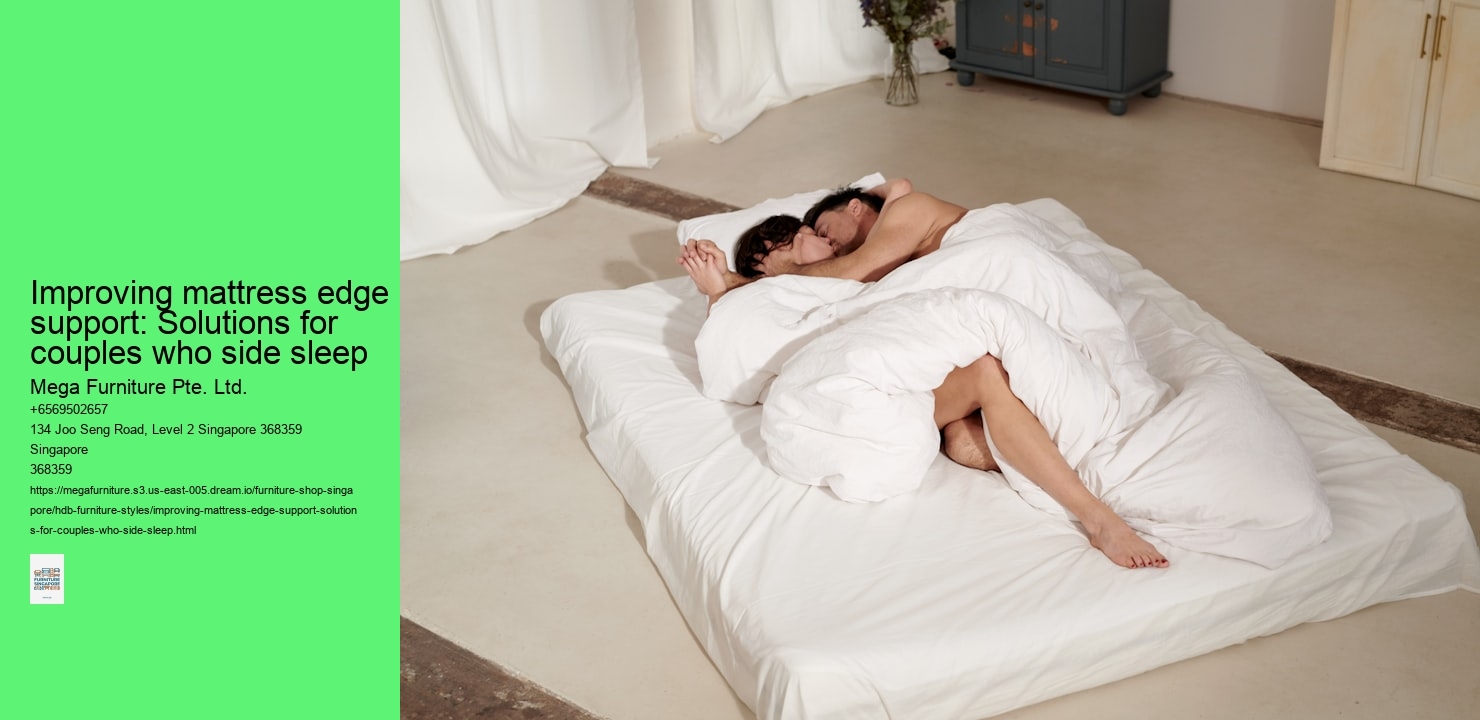
Picture a Queen mattress crammed into a 3.5 by 3 metre master bedroom. The frame sits flush against two walls to maximise floor space, leaving just a narrow strip for you to get out. That’s the reality in many older 4-room resale flats and 3-room layouts, where every centimetre counts. You’re essentially sleeping on a defined island, and its perimeter is your escape route. When that edge collapses, you lose usable surface—and in these compact rooms, usable surface is everything.
Edge support failure isn’t just about feeling a slight dip when you sit. For a side sleeper, it’s a nightly hazard. You naturally gravitate towards the perimeter to avoid rolling into your partner, or simply because the bed’s centre feels too confined. Older foam mattresses, especially those past their prime, develop a pronounced sink zone along the sides. This creates a subtle slope that pulls you towards the floor. You’ll find yourself unconsciously shuffling back towards the centre during the night, sacrificing comfort and sleep continuity. That lost strip of firm support can be as wide as ten to fifteen centimetres—in a room where the bed already occupies eighty percent of the floor, that’s a significant territory gone.
The problem compounds with weight, whether from a heavier individual or during pregnancy, when left-side sleeping is often advised. Increased pressure accelerates the foam’s breakdown at the edges, deepening that roll-off trench. It’s a common, frustrating trigger for Singaporean buyers to finally replace their mattress: they realise they’re effectively sleeping on a smaller bed than they paid for, and the risk of actually rolling off becomes palpable. For couples, it means one person often ends up perched on a crumbling cliff edge, compromising their spinal alignment precisely where their shoulder and hip need the most consistent support.
So, while a softer comfort layer is key for pressure relief, a robust edge is the unsung hero in a compact bedroom. Without it, the mattress’s advertised dimensions become a fiction. You might have a 152 by 190cm Queen, but you’re only safely using a 137 by 190cm strip. That’s a layout sacrifice no one should have to make. The only time this matters less is if you’re sleeping solo in a larger room where you can simply avoid the perimeter altogether—but in our typical HDB master bedrooms, that’s rarely the case.
The single biggest decision for a side sleeper is firmness, so the mattress firmness scale of 1 to 10 is the tool to use — side sleepers generally want the softer-to-medium-firm range, where the surface cushions the shoulder and hip rather than resisting them. Back and stomach sleepers go firmer; side sleepers go softer. Body weight nudges it too, so a heavier side sleeper may want slightly more support. Shopping by a numbered firmness beats trusting a vague "soft" label that means something different on every mattress.. If you're torn between constructions, the memory foam versus hybrid guide weighs them for the local climate — memory foam cradles the shoulders and hips with the deepest contour, while a hybrid adds a coil base for support and better airflow. For a side sleeper, it comes down to how much contour you want versus how cool you need to sleep. The guide lays out the trade-off plainly, which is exactly the decision a side sleeper is making..That moment when you shift from lying down to sitting up, and the mattress edge just collapses under you—it’s more than just annoying. For side sleepers, especially those with shoulder or hip issues, it’s a genuine strain. You’re already lying in a position that puts pressure on those joints, and then you need to lever yourself up from a soft, collapsing perimeter. That daily push against a sinking edge can aggravate existing pain, turning a simple morning routine into something you dread.
It’s a design flaw many don’t think about until they’re living with it. You might have chosen a mattress for its plush comfort layers, perfect for cushioning your shoulder and hip. But if those softer materials aren’t supported by a firm perimeter, you’re trading one problem for another. The mattress feels great while you’re asleep, but the struggle to get out of bed tells a different story. It’s a classic trade-off: pressure relief versus structural support.
The fix isn’t about choosing a firmer mattress overall. That would just defeat the purpose for side sleepers who need that medium-soft to medium contour. Instead, you need a mattress built with a reinforced edge. Look for models that use a high-density foam border or a dedicated edge-support system integrated into the core. The classic side-sleeper choice is a memory foam mattress — it conforms to the body's curves, relieving pressure on the hips and shoulders and helping keep the spine aligned. It also isolates motion well, so a restless partner is less disruptive. The one thing to check in the tropics is heat: gel-infused or open-cell foam dissipates body warmth far better than traditional foam. For the contouring, cradled feel side sleepers tend to prefer, memory foam is the first construction to try.. This creates a stable platform around the sleeping surface, so the comfort layers can do their job without the perimeter giving way. You’ll still sink into the centre for relief, but you’ll have a solid edge to push against when you need to rise.
For most side sleepers, especially in a typical Queen-sized setup in a 4-room BTO, this edge support is non-negotiable. A side sleeper's mattress in a queen size at 152 by 190cm is the common couple's choice, and side sleeping is where motion isolation earns its keep — a memory foam or pocketed-spring queen means one partner shifting doesn't jolt the other. The width also lets a side sleeper draw their knees up without hanging off the edge. Pair it with a queen frame built to the same dimensions. For most couples where one or both sleep on their side, the queen is the practical size.. The only time you might compromise is if you’re strictly a solo sleeper who never uses the edge for sitting or getting up, and your bed is placed against a wall. Even then, that sinking feeling when you eventually need to climb out can be a rude awakening. So while the comfort layers are your priority, don’t let the edge become your daily frustration.
" width="100%" height="480">Improving mattress edge support: Solutions for couples who side sleepWhen you sit on the edge of a foam mattress to put on your socks, you might feel it give way under you. That sinking sensation is a perimeter collapse, a common weakness in mattresses built for side sleeping. The softer comfort layers needed for shoulder and hip contouring often lack internal reinforcement around the sides. This creates a zone of instability that can't support weight, making the bed feel smaller than its actual dimensions. For couples sharing a Queen, this effectively steals usable sleep surface, forcing you both towards the centre. It's a trade-off that becomes apparent every morning and every night, not just during showroom tests.
The hammock effect describes how a mattress can sag in the middle when its edges are too soft to hold their shape. A foam mattress is the value route to side-sleeper comfort — foam contours to the body for pressure relief at a lower price than spring builds, and it's lighter and easier to handle. Judge it on foam density rather than thickness, since density decides how long it holds support. Many foam models now add cooling gel for warmer climates. For a side sleeper who wants contouring comfort without the premium-tier spend, a quality foam is a sensible starting point.. This isn't about general sagging from wear; it's a specific structural failure in the perimeter support system. In a medium-soft foam mattress, the centre remains relatively firm while the sides compress easily, creating a dish-like shape. Sleepers naturally roll towards this lower centre, which disrupts spinal alignment and can cause discomfort. For side sleepers, this unintended curvature can misalign hips and shoulders, counteracting the pressure relief the foam was meant to provide. It turns a bed designed for comfort into a source of new aches.
Proper edge support requires internal reinforcement, a feature often missing in simpler foam constructions. This reinforcement typically involves denser foam or a rigid foam encasement built into the sides of the mattress. Without it, the perimeter relies solely on the same soft comfort layers that contour your body, which compress too easily under seated weight. A reinforced edge acts like a retaining wall, keeping the sleeping surface flat and stable. For Singapore's common Queen size in a 4-room BTO master bedroom, this reinforcement ensures you can use the full width without fear of rolling off. It's a non-obvious specification many buyers don't know to ask about.

Weak edges force a peculiar sleeping dynamic for two people. Each person instinctively avoids the unstable perimeter, migrating towards the safer centre of the bed. This reduces the effective sleeping width, increasing the chance of disturbance when one partner shifts position. In humid nights, the reduced space can feel particularly cramped and uncomfortable. For pregnant women advised to sleep on their left side, a collapsing edge can make maintaining that position difficult and unsafe. The mattress, meant to be a shared refuge, becomes a zone of competition for stable real estate.
The true test happens not when lying down, but when sitting on the edge. In a showroom, don't just lie in the centre; sit squarely on the perimeter, near the corner, and apply your full weight. Observe how far the mattress compresses and whether it rebounds quickly or stays depressed. A good edge should feel supportive, with a firm resistance that prevents you from sliding off. This simple, often overlooked check reveals the structural integrity that will define your daily experience. For side sleepers prioritising pressure relief, this test ensures the comfort doesn't come with a hidden cost of usable space.
A mattress without proper edge support is like a Queen-size bed that only sleeps one. You’ll find yourself clinging to the centre, wary of that sudden drop-off when you roll too far. In a 12 sqm common bedroom, every centimetre counts, and a mattress that caves at the perimeter wastes usable space you’re already paying for.
The fix comes down to construction, not just firmness. Encased coils—where the springs around the edge are individually wrapped in a fabric casing—act like a reinforced border. They push back against your weight, keeping the sitting or sleeping surface stable right to the edge. High-density foam rails achieve the same goal through a different method: a solid, firm foam sidewall built into the mattress’s frame. Both approaches prevent that sagging feeling, but they feel distinct under pressure. The coil system often retains a bit more bounce, while the foam rail is a uniformly firm barrier.
For side sleepers, this firm edge is crucial alongside the softer top layers you need for shoulder and hip relief. That softer comfort layer—the memory foam or latex that cradles your curves—typically ends right at the edge. Without a firm foundation beneath it, the whole perimeter just collapses. So you’re looking for a mattress that has both: a plush, pressure-relieving top and a seriously reinforced border. Don’t just press the centre; sit squarely on the edge in the showroom. If you sink down noticeably, that mattress will shrink your usable bed area over time.
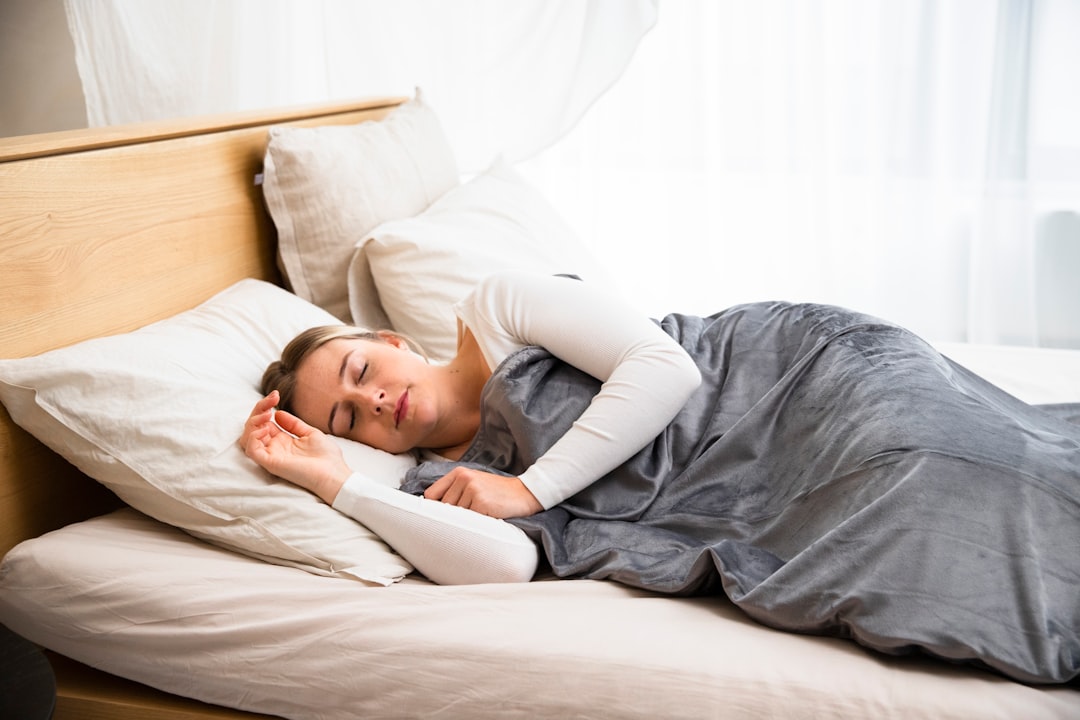
The exception? If you’re a strict solo sleeper who never sits on the edge to read or tie your shoelaces, maybe you can compromise. But for couples, or anyone in a compact space, a weak edge means one person inevitably gets pushed towards the middle. In a typical Queen, that’s a lot of lost real estate. Go for the reinforced border—either method works, but it must be there. For a side sleeper who runs hot, a latex mattress is the cooler alternative to memory foam — it still relieves pressure on the shoulder and hip, but with a more responsive, springier feel and better breathability, so it doesn't trap heat the way traditional foam can. Latex is also naturally hypoallergenic and durable. If you love the pressure relief side sleeping needs but hate sleeping hot, latex is the construction that gives you both.. A mattress that’s soft on top and firm at the sides maximises the footprint you’ve got, turning every inch of that 152 by 190cm rectangle into a proper sleeping zone.
Picture this: you’re lying on a new mattress in a showroom, feeling the plush comfort layers contouring to your hips and shoulders. That’s the moment you need to shift over to the edge—not just a gentle lean, but a proper sit-down with your full weight. Edge integrity is the thing that keeps you from feeling like you’re about to roll off when you’re perched on the side of a Queen bed, and it’s a detail that gets overlooked until you’re already living with the mattress. You can’t trust a brochure photo or a salesperson’s assurance here; you have to test it yourself.
For side sleepers, that perimeter support is doubly critical. The mattress needs to be soft enough to cradle your pressure points, but firm enough at the edges to hold its shape when you sit up or sleep near the side. A mattress that collapses at the edge will leave you feeling unstable, and on a shared bed, it effectively steals usable sleeping space. That’s why a hands-on test is non-negotiable—you need to physically apply pressure and feel for any significant dip or roll.
This is where a proper showroom visit becomes essential. If your current mattress is too firm for side sleeping, the guide to the best mattress topper in Singapore offers a cheaper fix than replacing it — a memory foam, latex, or gel topper adds a contouring, pressure-relieving layer over a hard mattress. It's the practical middle path for a side sleeper stuck with a too-firm bed, or anyone wanting to soften a mattress before committing to a new one. The topper does much of what a softer mattress would, at a fraction of the cost.. A spacious layout lets you get to the edge of a fully assembled bed, sit down firmly, and gauge the resistance. You’ll want to check both sides, because sometimes the support can vary. It’s a simple, ten-second check that tells you more than any spec sheet. If the edge sinks too much under your weight, that mattress isn’t going to serve a couple well over the long term.
The only time I’d skip this test is if you’re buying a mattress solely for a single sleeper in a room where nobody ever sits on the edge—maybe a child’s room or a seldom-used guest bed. But for a master bedroom, especially in a 4-room BTO where every centimetre of that Queen mattress counts, edge support is part of the foundation. You’ll know it’s right when you can sit comfortably on the perimeter without feeling like you’re sliding into a ditch.
Most buyers walk into a showroom and do the same thing—they press down on the centre of the mattress, judge the overall firmness, and think they’ve got it. Edge support, though, that’s a different test altogether. You need to sit on the very edge, like you do every morning when you’re getting out of bed in your 152 by 190cm Queen, or when you perch there to read. That’s where a mattress shows its true colours, especially in our compact HDB layouts where the bed often sits flush against a wall or a piece of furniture.
A common misstep is assuming a thicker mattress automatically means better edge integrity. The reality is that edge support comes from the construction, not the height. It’s about reinforced borders, often with a firmer foam or a dedicated support system woven into the perimeter. Choosing the construction matters for a side sleeper, so browsing by mattress type helps — memory foam for the deepest contour, latex for cooler pressure relief, hybrid for contour plus a supportive coil base. Each cradles the shoulder and hip differently, so the type sets how the pressure relief feels. Pure spring without a comfort layer is usually the one to avoid for side sleeping. Matching the type to the cradled feel you want narrows the field before comparing models.. A plush, thick mattress designed for side sleepers might have wonderful pressure relief for your shoulders and hips, but if the edges are soft, you’ll feel like you’re sliding off when you sit or sleep near the side. That sinking feeling at the perimeter defeats the usable sleeping area, which is a precious commodity in a 3.5 by 3 metre master bedroom.
Buying online without a physical test is where this mistake gets cemented. You can’t do the sit test on a website. You’ll see specs for coil count or foam density, but you won’t feel that crucial perimeter stability. For side sleepers, who might naturally roll towards the edge or need that firm border to get up comfortably, this omission is a real oversight. The only time I’d say skip the in-person test is if you’re replacing an identical model you already know and love—otherwise, you’re guessing.
So, the rule is simple: never judge a mattress by its middle alone. Go to a showroom, sit squarely on the edge, and see if it holds you steady. For most side sleepers in Singapore, that perimeter firmness is as important as the centre’s softness. The one exception? If you’re a solo sleeter in a spacious room and you never use the edge for sitting or sleeping, then maybe you can prioritise pure centre comfort. But for couples or anyone in a typical BTO layout, edge integrity is non-negotiable.
It's the first thing people do when they lie down on a demo mattress—they sit on the edge. You can see them testing it, wondering if it'll hold up when they sleep near the side or when they need to get up. For side sleepers, that edge support isn't just about sitting; it's about not rolling off when you're curled up on your left or right.
Which mattress brand has the best edge support for side sleepers? Look for a hybrid design. A mattress that combines a foam comfort layer with a sturdy coil system around the perimeter tends to perform best. The coils reinforce the sides, preventing that sinking feeling you get with a pure foam block. For side sleepers, you still want that softer top layer to cushion your shoulder and hip, but the firm edge keeps you properly positioned on the bed.
How to stop mattress from sagging at the sides? You can't really fix a mattress that's already sagging—that's a construction flaw. Prevention is the only way. Go for a model with a high-density foam edge or a reinforced border. Also, rotate your mattress regularly, even if it's a Queen. That distributes the wear more evenly, especially since side sleepers often favour one side of the bed.
Does memory foam mattress edge support improve over time? No, it doesn't. Pure memory foam mattresses often have the weakest edges because the material compresses uniformly. A side-sleeper pick sits within the wider mattress range in Singapore , so it's worth seeing the full spread of memory foam, latex, and hybrid options before deciding. The range is organised so you can filter to the contouring, softer-to-medium-firm builds that suit side sleeping. Browsing it shows how the pressure-relieving options compare on feel and price. Choose the construction and firmness for how you sleep, and the rest of the decision is size and budget.. Over years, that edge might even get softer as the foam loses some resilience. If you're set on memory foam's contouring feel, look for one that has a firmer foam or a foam-wrapped coil border specifically built into the sides.
Best mattress for pregnant side sleeper in Singapore? This one's specific. Doctors advise sleeping on the left side, so you'll be spending a lot of time right at the edge of the bed. You need a mattress that's soft enough for your growing hips and shoulders but has a rock-solid perimeter to keep you secure. A medium-firm hybrid with a reinforced edge is usually the safest bet—it gives the cushioning without the risk of rolling.
A mattress for side sleepers needs softer comfort layers to cradle shoulders and hips. High-density foam in these layers is crucial—it resists permanent sagging better in our humid climate. Look for quality materials like thick memory foam or latex, which provide the necessary contouring without collapsing at the edges over time.
A Queen bed frame fits most 3.5 by 3 metre BTO master bedrooms, but you still need to check the actual clearance on your side. Take your tape measure and note the exact length and width—the standard 152 by 190cm leaves a buffer for skirting boards and that awkward corner where the door swings open. More importantly, confirm your frame offers centre support. A mattress alone won’t hold its shape over years without a solid foundation underneath, especially if you’re sharing the bed. That’s a structural question you should settle before you ever step into a showroom.
Your priority list needs one clear winner. For side sleepers, pressure relief on shoulders and hips usually tops the list—a softer comfort layer that lets you sink in without misaligning your spine. But if you often sit on the edge to read or get up, firm edge support becomes crucial; a mattress that collapses when you perch on the side defeats the purpose of a larger bed. Decide which one matters more to you. You can’t test for both equally in a five-minute lie-down.
Hybrid mattresses, with their reinforced coil systems, often deliver that firmer perimeter while still providing the contouring a side sleeper needs. Among the options, Somnuz is Megafurniture's in-house line, with latex and pocketed-spring models that pair pressure-relieving comfort layers with a breathable Tencel® cover for the local climate — a side sleeper gets the contour and the cooling in one, without the name-brand markup. Pocketed springs also isolate motion, a plus for couples. For a side sleeper after well-built, cool-sleeping pressure relief at fair value, the Somnuz line is a strong starting point.. They typically sit in the $1,200 to $2,400 range, which is a realistic budget for a long-term investment. If that fits your finances, you’re looking at a category worth your time. Just remember, the coils add weight and a certain rigidity—they won’t bend like a pure foam mattress might when navigating a tight lift door.
When you finally visit, you’ll know your room’s limits, your frame’s requirements, and your personal must-have. That clarity turns a vague browsing session into a targeted test. Lie down in your actual sleeping position for a full ten minutes, not a polite thirty-second dip. Shift from side to edge, feel how the material responds. You’re checking for the one thing you wrote down, not every feature under the sun.